This is a question we get a lot and it’s absolutely the right one.
A cabin can look beautiful and feel miserable if the thermals haven’t been thought through. Cold floors. Hot afternoons. That “tin box” feel. No thanks.
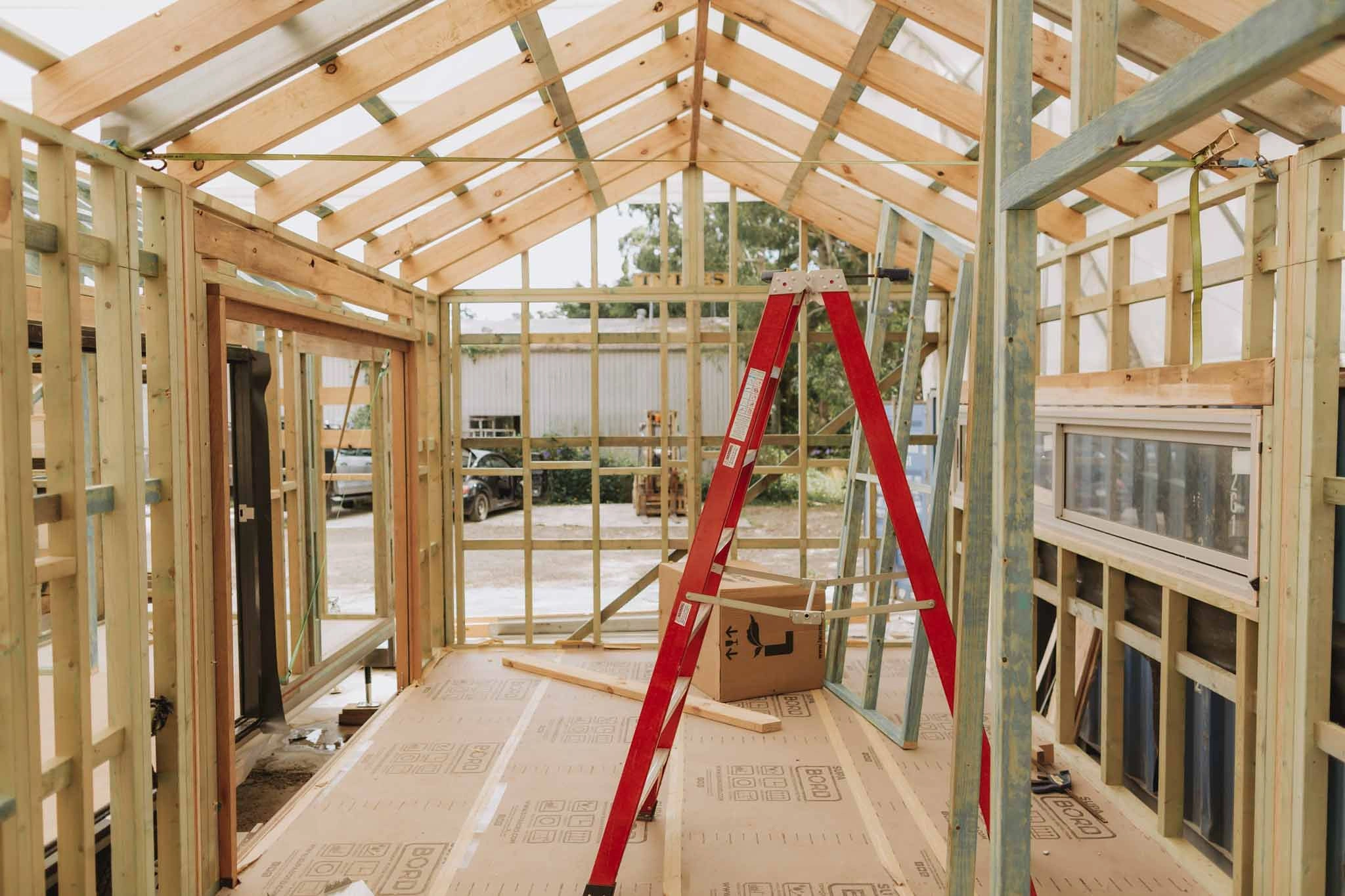
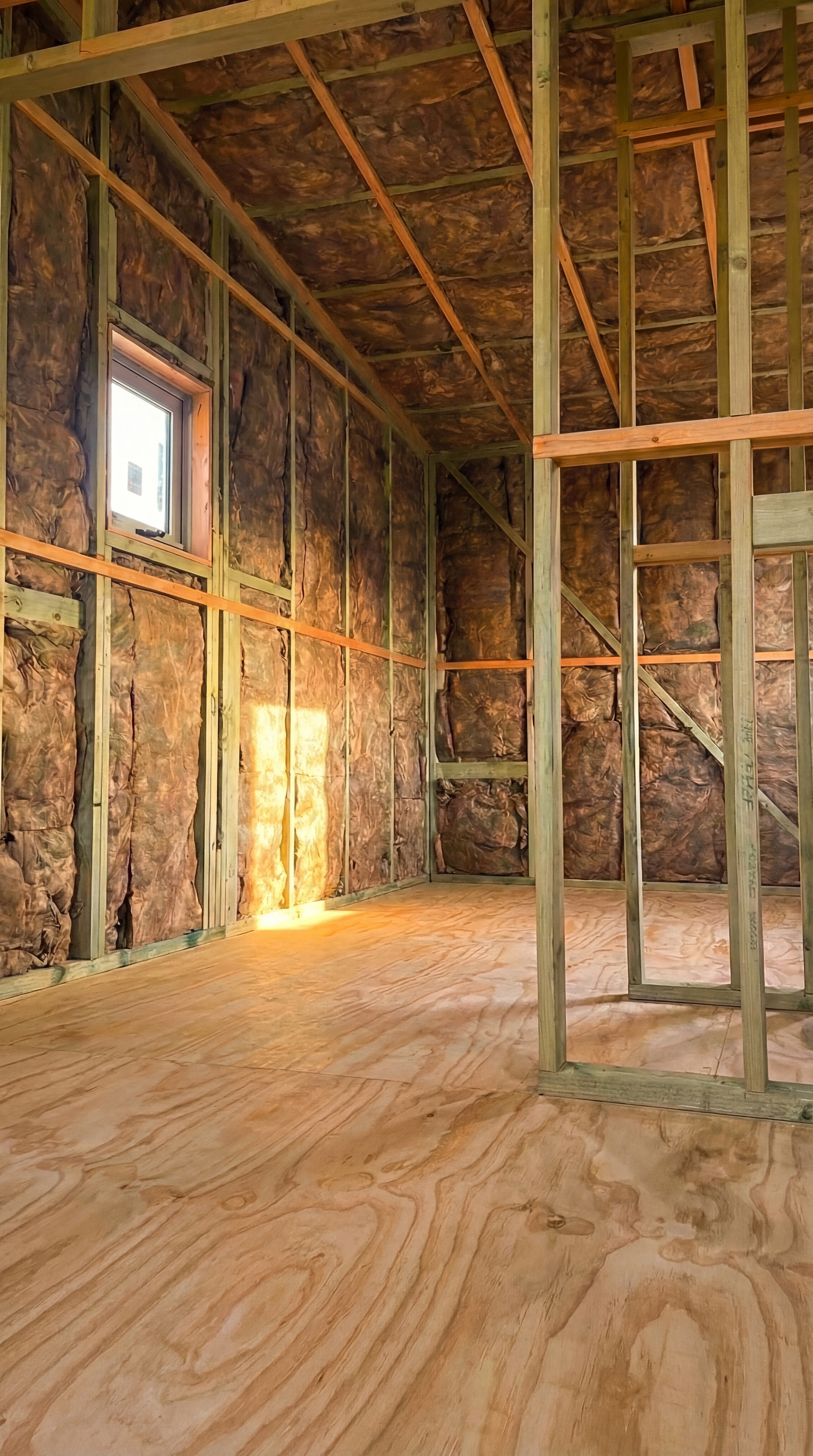
All Zinc Studio cabins are insulated as standard, in the same way as a full residential build. We factor in full insulation for walls, ceiling, and underfloor, using a timber-framed build-up designed for real-world comfort. And if your site calls for it (colder climate, exposed location, full-time living), we have a few straightforward upgrade options.
Let’s walk through the exact specification, what it means, and where upgrades make the most difference.
At a glance: our insulation specification
Standard build:
Wall insulation: R2.5 Earthwool batts
Upgrade option: R2.7 Earthwool batts
Ceiling / roof insulation: Anticon wrap R1.3 + R2.5 Earthwool batts = Total R3.8
Upgrade option: R3.5 Earthwool batts → Total ~R4.3 (with Anticon)).
Underfloor insulation: Kingspan Air-wrap style layer with a sealed 50mm air gap
Whole-building wrap: full external waterproof/weatherproof wrap (more below)
Interior lining: plywood internal lining provides a modest additional thermal buffer
Optional upgrade: double glazing
Note: These are our baseline insulation inclusions and easy upgrade options, however we can build to any spec for more extreme environments, both hot and cold.
R-values at a glance
An 'R-value' is a measure of resistance to heat flow. Higher R-value = better thermal resistance.
But comfort isn’t one product or one number. It’s the whole system:
ceiling/roof (the biggest player in most small buildings)
walls
underfloor
windows and doors
and how well the envelope is sealed and detailed
That’s why we talk about the “thermal treatment” rather than just “what R value / batts are inside.”
Wall insulation: Earthwool R2.5
Our cabins are generally timber framed, which creates consistent insulation cavities and suits bulk insulation extremely well.
Standard wall insulation: R2.5 Earthwool batts
What you feel day-to-day:
a cabin that holds temperature longer once it’s warmed (or cooled)
less “edge chill” near external walls in winter
stable internal temperatures overall
Upgrade option available: Earthwool R2.7 (no cavity thickness increase required)
Ceiling insulation: Anticon R1.3 + Earthwool R2.5 (Total R3.8)
If you’re thinking about comfort, the ceiling matters a lot.
In summer, the roof is where the heat load hits first. In winter, warm air rises and wants to leave the building through the highest point.
Standard ceiling build-up: Anticon wrap R1.3 + Earthwool batts R2.5 = Total: R3.8
Why the Anticon layer is in the system
Anticon-style roof blanket systems are commonly used under metal roofing to provide additional thermal resistance and to support condensation management when properly detailed. It’s not a magic fix on its own, but as part of a complete roof build-up it plays an important role.
For even higher-performance builds, we can increase rafter size (e.g., to approximately 145mm) to create room for thicker ceiling batts.
Ceiling upgrade: increase rafter depth + R3.5 batts (Total ~R4.3 with Anticon)
This is one of the most noticeable upgrades for overall comfort, especially in:
colder regions
high exposure sites (wind + rapid temperature swings)
cabins intended for full-time living
Note: Depending on the model of cabin and method of transport you select, increasing the ceiling rafter depth may eat into the interior space slightly as the exterior height is capped for transport purposes. Generally this is not a noticeable difference.
Underfloor insulation: Kingspan air-wrap + sealed 50mm air gap
A lot of “cold cabin” complaints come from one place: the floor.
Many cabins are elevated (often on steel skids), which means the underside is exposed to moving air. Moving air strips heat away fast, and the floor can feel cold even when the room temperature reads fine.
Our underfloor approach uses:
Kingspan Air-wrap style insulation layer
and a sealed 50mm air gap
The key word there is sealed. A well-controlled air gap improves performance; an uncontrolled one can do the opposite. Air is also surprisingly a fantastic insulator itself when in a sealed environment.
This underfloor build-up helps reduce heat loss and improves the “barefoot” comfort factor.
The external wrap: waterproof/weatherproof, and quietly essential
We also wrap the building in a full external waterproof/weatherproof wrap.
Does it have an R-value? In most cases, weatherproof building wraps aren’t “insulation” in the same way bulk batts are. Their core job is to manage water and air movement so the structure stays protected and the insulation can do its job properly over time.
Think of it like this:
Batts = the warm layer
Wrap = the rain jacket + wind blocker
A wrap still matters because:
insulation performs better when it stays dry
air movement through a wall cavity can reduce effective performance
the overall envelope durability improves when moisture is managed correctly
Plywood internal lining: a small “bonus” thermal buffer
We use plywood internal lining because it looks fantastic, wears well, and suits the character of our cabins. As a bonus, ply also happens to be a good insulator, and so this lining choice actually provides a modest additional thermal buffer compared with other linings. It won’t replace insulation batts (nothing does), but it does improve the overall thermal envelope.
Optional upgrade: double glazing (often the smartest comfort upgrade)
If insulation is the “jacket,” windows are the “zips and openings.” Windows and doors are typically where heat is gained and lost most easily, so glazing choice can have an outsized impact on comfort.
We offer double glazing upgrades where required and we commonly recommend it when:
the site is particularly cold, windy, or exposed;
the cabin will be lived in full time;
you want better temperature stability and reduced winter chill near glass;
you want improved condensation resistance; and
you’d like added acoustic comfort (rain, wind, road noise)
Single glazing can still be perfectly suitable in many contexts. But if you’re aiming for maximum comfort with minimal heating/cooling input, double glazing is often a strong upgrade.
What does this mean in real life?
Here’s what clients typically notice when they step inside a Zinc Studio cabin:
It warms up quickly in winter (small volumes do that well).
It holds temperature longer once conditioned.
It doesn't feel “tinny” and is less reactive to outside temperature swings.
The roof doesn’t bake the interior on sunny days the way uninsulated metal-roof structures can.
Usually it’s not about R-values. It’s about this: “Will it feel comfortable… all year round?” That’s what we build for. A cabin that looks premium, lasts, and actually feels good to stay or live in.
Want a recommendation for your site?
Send us:
your location / region
how you’ll use the cabin (guest stays, Airbnb, full-time, studio)
a quick note on site exposure (windy ridge vs sheltered pocket)
and we’ll suggest the right insulation and glazing package for your situation.
Send us a quick message using the button below to ask a question or tell us about your project.